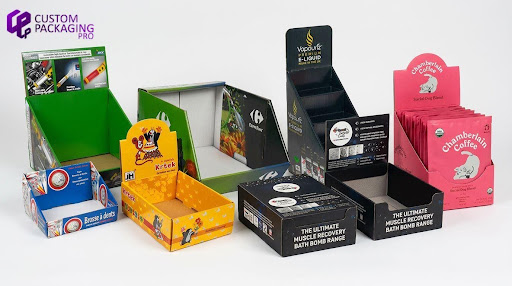
Custom Display Boxes: A Practical Guide to Better Product Presentation Packaging has two jobs in a retail environment. It needs to protect the product, but it also needs to help customers notice and understand what is being sold. When products compete for attention on crowded counters, shelves, and checkout areas, presentation can directly affect how easily shoppers interact with them.
This is where Display Boxes, Display Packaging, and Custom Display Boxes become useful. Instead of keeping products fully enclosed, display-focused packaging can organize merchandise while keeping important product details visible and accessible.
From cosmetics and jewelry to footwear, accessories, snacks, and promotional products, display packaging can be adapted around the size, weight, placement, and presentation needs of different items.
What Makes Display Packaging Different?
Standard packaging is often designed primarily for storage, transportation, or individual product protection. Display packaging has an additional responsibility: presenting the product effectively at the point of sale.
A well-designed display box may help:
- Keep multiple products organized
- Improve product visibility
- Make smaller items easier to browse
- Create a defined area for brand messaging
- Reduce clutter around checkout counters
- Support promotional or seasonal arrangements
- Make restocking simpler for retail staff
The exact structure depends on how and where the package will be used. Countertop displays, for example, have different requirements from shoe displays or protective cases for collectibles.
For brands using Custom Product Packaging, the display structure should therefore be planned around both the product and its retail environment.
Choosing Display Boxes Around the Product
There is no single display box style suitable for every item. Product dimensions, weight, fragility, quantity, and customer interaction all influence structural decisions.
Lightweight cosmetics may work well in compact cardboard counter displays, while collectible products may require more rigid display cases. Footwear needs considerably more internal space than jewelry or small accessories.
Before choosing a design, consider:
- How many units will be displayed together?
- Will customers remove products individually?
- Does the item need to remain visible from several angles?
- Will the packaging sit on a shelf, counter, or floor?
- Does the product require internal dividers or inserts?
- How frequently will the display be restocked?
Answering these questions before production can prevent oversized packaging, weak structures, and inconvenient product arrangements.
Counter Display Boxes for High-Interaction Areas
Counter Display Boxes are commonly positioned near checkout areas, service counters, reception desks, and other high-traffic locations.
They are particularly useful for smaller products such as:
- Cosmetics
- Personal care products
- Candy and snacks
- Small electronics accessories
- Promotional merchandise
- Sample-size products
- Gift items
A counter display usually needs a relatively compact footprint because retail counter space is limited. At the same time, products should remain easy to remove without causing the remaining items to fall or become disorganized.
Die-cut openings, raised back panels, compartments, and internal dividers can all be incorporated depending on the product.
For businesses already using Custom Retail Packaging, matching counter displays with individual product packaging can also create a more consistent presentation.
Cosmetic Display Boxes Need Organization as Well as Visibility
Cosmetic products often involve multiple shades, sizes, fragrances, or variations. Poor organization can make even attractive products difficult to browse.
Cosmetic Display Boxes can separate products into clearly defined rows or compartments while keeping them visible.
A display for lip products, for example, may require multiple narrow sections, while skincare products in bottles or jars may need wider compartments and stronger support.
Structural planning should account for the product’s actual dimensions rather than relying on a generic template. Excess space can make products shift or lean, while compartments that are too tight may make items difficult for customers to remove.
Printing can then be used to communicate brand identity, product categories, usage information, or other relevant details without overwhelming the display.
Jewelry Display Boxes and Premium Presentation
Jewelry presents a different challenge because the products are usually small but highly dependent on presentation.
Jewelry Display Boxes can be designed for rings, earrings, bracelets, necklaces, watches, and other accessories. Inserts or fitted compartments may help keep individual pieces separated and properly positioned.
The visual hierarchy is especially important. Excessive graphics can compete with the jewelry itself, while a restrained design can keep attention focused on the product.
Depending on the intended application, brands may use cardboard display boxes, rigid structures, transparent cases, or combinations of packaging components.
The best choice depends on the value of the item, retail environment, required protection, and desired customer experience.
Shoe Display Boxes Require a Different Approach
Shoe Display Boxes deal with larger products and require more internal volume than most countertop packaging.
Depending on the retail concept, shoes may be displayed in open-front structures, stacked boxes, windowed packaging, or individual presentation boxes.
Important considerations include:
- Shoe size and dimensions
- Pair arrangement
- Structural strength
- Stackability
- Storage requirements
- Ventilation where appropriate
- Visibility of the product
- Ease of handling
The box should also be practical beyond presentation. Retailers often need to move, stack, store, and retrieve footwear efficiently.
This is why customized sizing can be valuable. Proper dimensions reduce unnecessary material while helping the product remain securely positioned.
Acrylic Display Cases and Transparent Presentation
Not every display solution needs to be made from paperboard or corrugated material.
Acrylic Display Cases and Perspex acrylic display boxes can be useful when maximum visibility is important. Transparent cases allow customers to view products while reducing direct handling.
They are commonly associated with:
- Collectibles
- Models
- Memorabilia
- Jewelry
- Decorative products
- Limited-edition merchandise
- Premium presentation items
Premium display cases for collectables can be particularly useful when the object itself should remain the visual focus.
However, acrylic display and cardboard display boxes serve different purposes. Cardboard structures are often practical for printed branding and retail merchandising, while acrylic display cases can emphasize unobstructed product visibility.
The right choice depends on whether branding, accessibility, protection, or visual exposure is the priority.
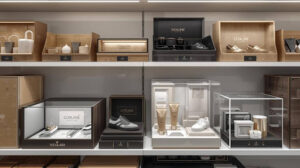
Product Display Boxes as Part of the Retail Experience
Product Display Boxes can influence how shoppers encounter merchandise before they ever pick it up.
An effective display creates a clear relationship between the product, its packaging, and the surrounding retail space. The objective is not simply to add more graphics. It is to remove friction from the shopping experience.
A customer should quickly understand what the product is, where individual units are located, and how to access them.
For a small business, this can be particularly important. A carefully planned display can give a group of products a more organized presence without requiring a large dedicated retail fixture.
Businesses investing in Custom Boxes With Logo can also coordinate the individual package and display unit so the visual identity remains consistent from shelf presentation to purchase.
Material Selection for Display Packaging Boxes
The material used for Display Packaging Boxes should reflect the product weight, expected handling, display duration, and printing requirements.
Paperboard may be suitable for lightweight retail products. Corrugated materials can provide additional structural strength for larger or heavier merchandise. More rigid structures may be appropriate where long-term presentation is required.
Material thickness also matters. Using a board that is too light can cause bending, particularly around product openings and load-bearing areas. Using unnecessarily heavy material can increase bulk without providing meaningful benefits.
Material selection should therefore be based on the intended application rather than appearance alone.
Claims about eco-friendly boxes should also be considered carefully. Recyclability and environmental characteristics can vary depending on coatings, laminations, adhesives, inks, local recycling infrastructure, and material combinations.
Custom Printing Without Overcrowding the Display
Custom Printed Display Boxes provide space for logos, product information, colors, patterns, instructions, and promotional messaging.
The challenge is deciding what actually deserves attention.
A practical visual hierarchy might prioritize:
- Brand identification
- Product name or category
- One important product message
- Supporting information
- Required product details where applicable
Trying to communicate everything on the front panel can make the display difficult to scan.
Good box designs use available space intentionally. A header panel can carry branding, while side panels may contain supporting information. The front opening should generally remain focused on making products easy to see and access.
This balance is important for any Customized Packaging intended for busy retail environments.
Display Boxes Wholesale and Bulk Planning
Ordering Display Boxes Wholesale requires more than choosing a quantity.
Businesses should first confirm the final product dimensions, number of units per display, material, printing requirements, and assembly method. A mistake repeated across a large production quantity can become expensive.
Before committing to bulk production, it can be useful to evaluate:
- Finished dimensions
- Product fit
- Structural stability
- Assembly time
- Shipping configuration
- Storage space
- Print placement
- Retail shelf or counter dimensions
Prototypes or samples, where available, may help identify structural problems before larger quantities are produced.
Brands working with Custom Packaging Manufacturers should provide accurate product specifications rather than expecting the manufacturer to estimate dimensions from a general product category.
Designing for Shipping, Storage, and Assembly
A display box may look excellent when assembled but still create logistical problems if shipping and storage are ignored.
Some cardboard displays can be designed to ship flat and assembled when needed. This may reduce storage volume compared with transporting fully erected displays.
Assembly should also be considered during structural design. Complicated folding sequences can consume staff time, especially when many units need to be prepared for multiple retail locations.
Businesses should consider the entire packaging journey:
manufacturing → packing → transportation → storage → assembly → retail display → customer interaction.
A successful Custom Packaging solution should function throughout this process rather than only looking attractive in a product photograph.
Common Display Packaging Mistakes
Several problems can reduce the effectiveness of otherwise attractive display packaging.
- Choosing the wrong dimensions: Oversized compartments allow products to move, while undersized openings make them difficult to remove.
- Ignoring product weight: A structure that works for lightweight products may bend when loaded with heavier items.
- Using too much printed information: Excessive text and graphics can compete with the products.
- Forgetting the retail footprint: A display may be too wide, tall, or deep for the intended counter or shelf.
- Neglecting restocking: Staff should be able to refill products without dismantling the entire display.
- Designing only for appearance: Shipping, storage, assembly, and handling requirements should be considered from the beginning.
Addressing these issues early can make both standard and custom display boxes more practical.
How to Select the Right Display Box
Start with the product rather than the artwork.
Measure the product accurately and determine how many units need to appear in each display. Then identify where the display will be positioned and how customers are expected to interact with it.
From there, choose the appropriate structure, material, opening style, inserts, printing, and finishing options.
A Custom Packaging Company may need information about product weight, dimensions, display quantity, and intended retail placement before recommending an appropriate structure.
This product-first approach helps ensure that visual design supports functionality instead of compensating for a poorly planned box.
Final Thoughts
Effective Display Boxes bring product organization, presentation, branding, and practical retail use into one structure. Whether the application involves Counter Display Boxes, Cosmetic Display Boxes, Jewelry Display Boxes, Shoe Display Boxes, acrylic display cases, or other Display Packaging Boxes, the design should reflect the actual product and how customers will encounter it.
For brands considering Custom Product Packaging, Custom Boxes With Logo, or broader Custom Packaging programs, display units should be planned as part of the overall packaging system rather than as an isolated marketing piece. Working with experienced Custom Packaging Manufacturers can also help translate product dimensions and retail requirements into structures that are practical to manufacture, transport, assemble, and use.
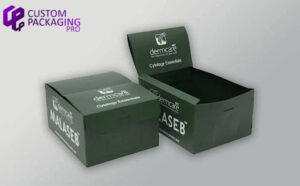
Frequently Asked Questions
- What are display boxes used for?
Display boxes are used to organize and present products in retail environments such as counters, shelves, checkout areas, exhibitions, and promotional displays. Their structure can help keep products visible and accessible while providing space for branding and product information.
- What is the difference between display packaging and regular product packaging?
Regular product packaging primarily contains and protects an individual item. Display packaging is designed to present one or multiple products in a retail setting while supporting visibility, organization, accessibility, and branding.
- Can custom display boxes be made for different product sizes?
Yes. Custom Display Boxes can be designed around specific product dimensions, quantities, weights, and retail placement requirements. Accurate measurements are important for achieving a secure and practical fit.
- Are cardboard display boxes suitable for countertop use?
They can be. Cardboard display boxes are commonly used on counters for lightweight merchandise. The appropriate board thickness and structural design depend on product weight, display size, and expected handling.
- When are acrylic display cases useful?
Acrylic Display Cases are useful when clear product visibility and reduced direct handling are priorities. They are often used for collectibles, memorabilia, jewelry, models, and other products where customers may benefit from viewing the item from multiple angles.
- What should businesses check before ordering display boxes wholesale?
Before ordering Display Boxes Wholesale, businesses should verify product dimensions, box size, material strength, unit capacity, printing, assembly method, shipping configuration, and the available retail display space. Testing a sample or prototype where appropriate can help identify fit or structural issues before a larger production run.