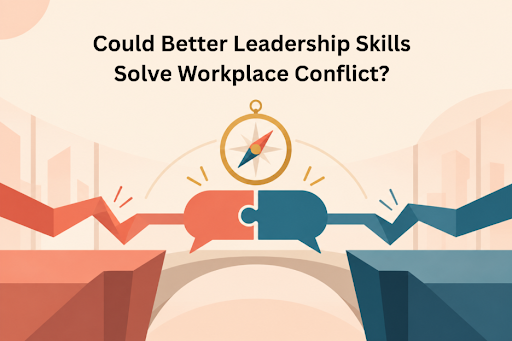
Can workplace conflict be resolved before it damages trust and daily performance? Disagreements are natural when people have different ideas and working styles. However, poor handling can turn a small concern into a serious problem. CMI Level 5 helps managers understand how communication and team support influence workplace relationships.
Strong Leadership Skills can help managers notice tension early and guide employees towards fair solutions. This blog explores how capable leadership can reduce conflict and create a healthier working environment for everyone.
How Better Leadership Skills Can Turn Conflict into Cooperation
Here are some ways that improved leadership can assist managers in resolving conflicts and fostering collaboration:
Recognising Conflict Before It Escalates
Conflict at work seldom arises out of the blue. Employees may become more reserved or express annoyance when speaking. When relationships become challenging, the quality of work may also decline.
These early warning indicators can be recognised by managers with good Leadership Skills. They monitor behavioural shifts and address issues before they become more widespread. This enables team members to talk about issues while they are still controllable.
An essential component of conflict resolution is taking early action. It lessens the emotional strain surrounding the problem and stops miscommunication from spreading. When employees are certain that their manager would react calmly, they are also more inclined to communicate candidly.
Creating Space for Honest Communication
One of the most frequent reasons for conflict at work is poor communication. Employees may feel neglected or communications may be misinterpreted. These circumstances may lead to blame and frustration.
Managers can enhance their team and individual communication skills by studying CMI Level 5. Difficult talks might feel safer if you ask clear questions and respond politely.
Leaders must also clarify what will happen next in order for workplace communication to be effective. Employees must be informed when they might anticipate an update and whether action will be taken. This transparency lowers ambiguity and demonstrates that all issues are taken seriously.
Listening Without Taking Sides
When disagreements arise, employees want to be heard. One employee may feel ignored if management makes a decision too quickly. This may exacerbate animosity and complicate the resolution of the issue.
Managers who possess strong Leadership Skills may listen to everyone without passing judgment right away. They ask questions, concentrate on the facts, and think about how the dispute has impacted all parties.
It is not necessary to agree with every viewpoint in order to listen fairly. It entails providing people with a fair chance to describe their experiences. This strategy fosters employee trust and aids management in identifying the true source of the issue.
Finding the Cause Behind the Disagreement
Arguments frequently start with obvious issues, but the underlying cause may be hidden. When the true problem is an unreasonable workload, two employees may argue over a deadline. In fact, confusing roles may be the root of a communication issue.
CMI Level 5 knowledge can assist managers in closely examining issues. They can investigate the circumstances that led to the escalation of irritation rather than concentrating solely on the most recent disagreement.
Improved conflict management results from identifying the underlying cause. It enables leaders to develop solutions that deal with the actual issue. The identical argument can resurface in a slightly different form if this step is not taken.
Keeping Emotions Under Control
Emotions may rapidly turn conflict into a personal matter. Useful conversation may be hampered by harsh language and defensive responses. Therefore, managers need to establish the tone for the discussion.
When others are upset, managers with strong Leadership Skills may maintain composure. They give people time to voice their concerns, keep the conversation focused, and use neutral language.
Everyone involved is encouraged to behave professionally by a calm response. Additionally, it demonstrates to employees that challenging circumstances can be handled without hostility or blame. Even when there is disagreement, this can safeguard professional relationships.
Developing Solutions with the Team
It is not always necessary for managers to address every question. Employees engaged in the dispute might have a deeper understanding of the circumstances than anyone else. Seeking their opinions can result in more workable solutions.
Leaders can direct this conversation with the knowledge gained at CMI Level 5. They can motivate team members to decide on shared objectives and recommend courses of action that are equitable to all.
People become part of the solution as a result, which promotes team collaboration. Additionally, people are more inclined to abide by a deal they contributed to. The solution can then be kept on course with clear roles and deadlines for reviews.
Building a Culture That Prevents Future Conflict
Daily leadership is essential to preventing conflict. Many problems can be prevented by having regular interactions and clear expectations. Employees should also know how to politely voice concerns.
By praising excellent work and encouraging candid criticism, managers can encourage employee engagement. Frequent team conversations help identify minor annoyances before they have an impact on output.
Psychological safety is another benefit of consistent leadership. People feel free to express differing viewpoints without worrying about being treated unfairly or embarrassed. Not all disagreements are eliminated by this. Rather, it enables teams to manage disagreements with maturity and a common goal.
Conclusion
Better leadership cannot remove every disagreement, but it can prevent conflict from controlling the workplace. Managers who listen carefully and act fairly can turn tense moments into opportunities for improvement. They can also protect trust while keeping teams focused on shared goals.
Learning with Oakwood International can help developing managers strengthen their approach to workplace relationships, handle difficult conversations with confidence and create a culture where concerns are addressed constructively.